Skip to Main Content Skip to Footer Content
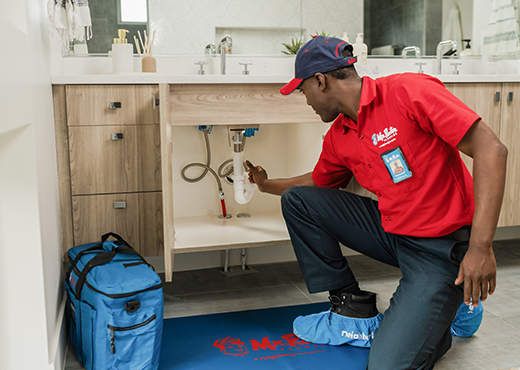
Mr. Rooter technician carrying a tool bag and standing beside a branded van.

Water Leak Detection in Sunnyvale, CA

Find It Before You Open the Floor

A hidden leak rarely announces itself. Santa Clara Valley Water District puts a typical family's losses at 180 gallons a week, or more than 9,000 gallons a year, from leaks alone. Water leak detection from Mr. Rooter Plumbing® of Sunnyvale - Mountain View pinpoints it with acoustic listening equipment, thermal imaging, and pressure testing, so the only thing opened is where the leak is.

Let Us Call You

By checking this box, I agree to opt in to receive automated SMS and/or MMS messages from Mr. Rooter Plumbing, a Neighborly company, and its franchisees to the provided mobile number(s). Message & data rates may apply. Message frequency varies. View Terms and Privacy Policy. Reply STOP to opt out of future messages. Reply HELP for help.

By entering your email address, you agree to receive emails about services, updates or promotions, and you agree to the Terms and Privacy Policy. You may unsubscribe at any time.

  • Every water leak detection visit starts the same way. Before anything gets opened, we confirm the leak is real and work out which side of the house it's on. Every fixture and appliance goes off, and then we watch the meter. Sunnyvale meters sit in a concrete box near the curb, and most carry a small triangle or asterisk that turns whenever water is moving. If it turns with the house shut down, water is escaping somewhere past the meter. Then we isolate. Closing the main shutoff separates the buried service line from the interior plumbing, and a second reading tells us which of the two is losing water. That one step shapes the entire job, because a leak in the service line is a different repair, a different access route, and a different price from a leak under the slab or inside a wall. Skipping it is how a homeowner ends up with the wrong section of floor opened, and it happens more often than it should. It takes twenty minutes at the front of the visit, and it's the reason everything after it is a search rather than a guess.

  • Pressurized water escaping a pipe makes a sound, and under a concrete slab that sound carries. Ground microphones and acoustic amplifiers pick it up through flooring and foundation, and moving the sensor across a grid shows where the signal peaks. That's usually the leak, to within a foot or so. Thermal imaging gives us a second reading. A hot water line losing water warms the slab above it, a cold line behind drywall leaves a cooler patch, and an infrared camera sees both long before anything is visible to the eye. Pressure testing is the cross-check. We isolate a section, charge it, and watch whether it holds. A section that drops has the leak, a section that holds does not, and the search narrows without anybody touching the structure. Electronic moisture meters then map how far water has already tracked through subfloor and drywall, which matters to the repair as much as the location does. For the stubborn ones, a tracer gas can be put into the drained line and picked up at the surface as it works its way out. No single tool is right every time, which is why we read them against each other.

  • You get a mark on the floor or the wall, images of what the equipment showed, and a plain explanation of what sits behind it. Then you get options, with a flat-rate price on each, before anyone starts cutting. A pinhole in a copper line under the slab can often be reached through one small opening and repaired in place. A line that has failed in more than one spot is usually better rerouted overhead or through a wall than chased across the slab section by section. A leak on the buried supply line between the meter and the house is its own job, and we'll say so rather than fold it into something else. Leak detection and leak repair are separate decisions, and you're entitled to make the second one later, or with somebody else. What no homeowner should do is accept a repair price from a company that hasn't located the leak yet. A number quoted before the search is a number attached to a guess, and it has to move once the real fault turns up. Ask any contractor what they found and how they found it before you look at the price attached to it.

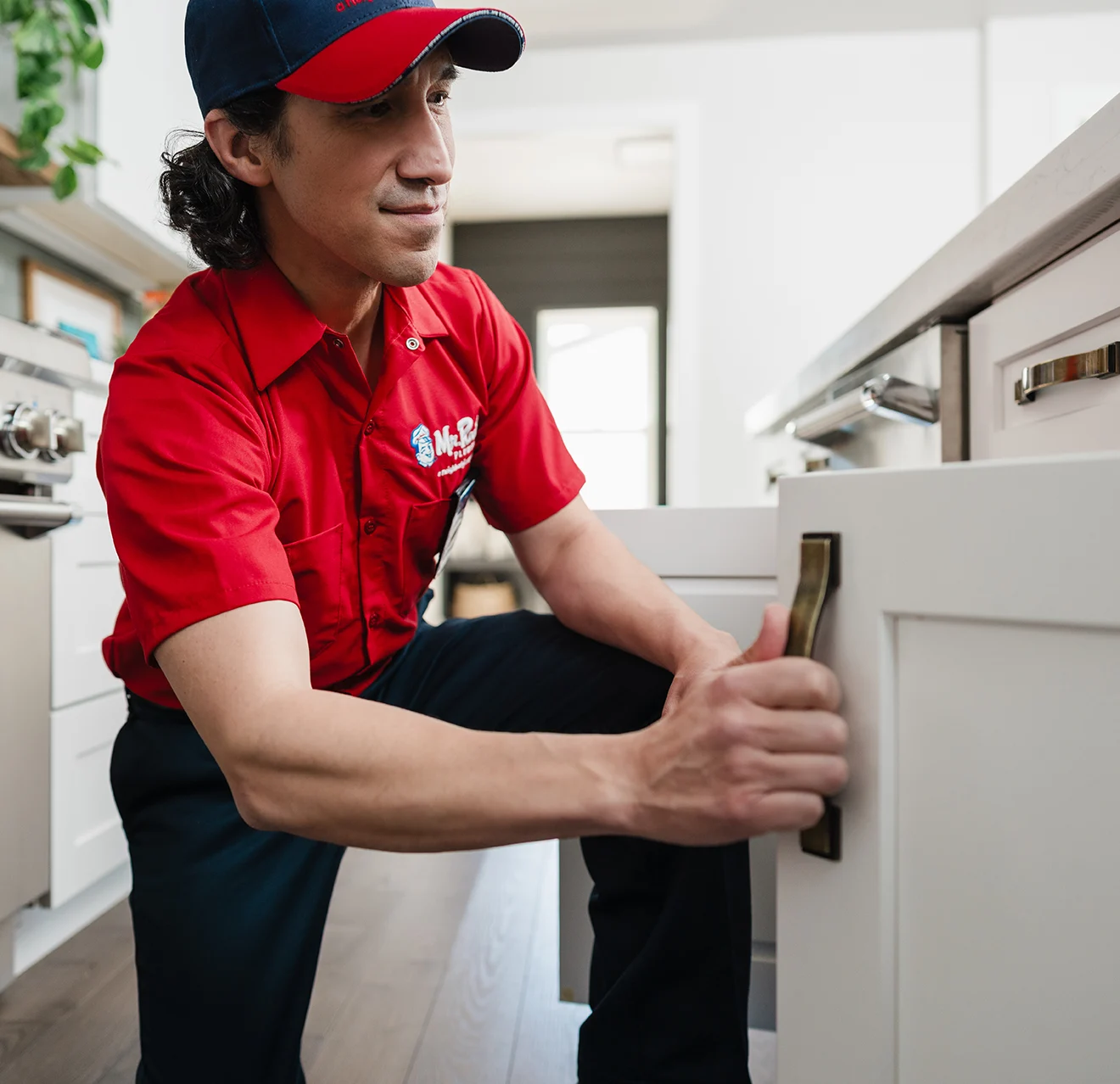
Mr. Rooter technician opening lower cabinet doors.

How a Leak Shows Up on a Sunnyvale Water Bill

Most people find a leak on paper before they find it in the house. Sunnyvale bills water by the CCF, a unit of 100 cubic feet, which works out to roughly 748 gallons, so a steady leak turns into a whole extra billing unit appearing every month for water nobody used.

Detection is getting faster locally, too. Valley Water reports that over 71,000 advanced meters have been installed across Santa Clara County since 2016, and retailers running them flag continuous flow that never stops overnight. If you have had one of those alerts, take it seriously.

Leak detection in Sunnyvale also runs into one local wrinkle. A great deal of the housing here is slab-on-grade, and the city holds around 1,100 Eichler homes, built with plumbing and radiant heating pipes cast into the concrete floor itself. Under a slab, a leak has nowhere to surface. It tracks sideways along the pipe trench and shows as a warm patch of floor, carpet that stays damp, or a faint hiss with the house quiet, often a long way from where the pipe actually failed. That is what acoustic and thermal work exists for.

Not every leak is a slow one, and not every one waits for business hours. At 8:30 on a Saturday night, a customer near Waverly Park in Mountain View called us because the city had turned off their water. The leak was losing a lot of gallons per minute. We made a temporary repair that night. The permanent fix waited for the working week, and for good reason. When the week began, we contacted the utilities and the permitting offices so we wouldn't hit anything when we made the repair. We were back on the Tuesday, finished the repair, and had the inspections done within the week.

It's worth knowing who owns what. The city maintains the mains under the street, but the pipe from your meter to your house belongs to you, and a failure on that stretch is your repair. If water is turning up at a drain rather than a supply line, a camera inspection is the right tool instead, and where the fault does sit on the buried supply line we move straight to water line repair.

Our Water Leak Detection Process

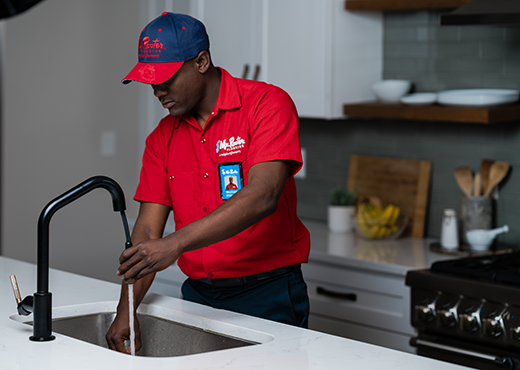
Book the visit and you get an arrival window, a call ahead, and a flat-rate price quoted before work starts rather than an hourly meter running while we search. The visit follows the same order every time. We confirm the leak at the meter, isolate the service line from the house, then work inward with acoustic equipment, thermal imaging, and pressure testing until the location is fixed to within a foot or so. We mark it, show you what we saw, and walk through the repair options and what each one involves. If it turns out your plumbing is sound and the water is coming from somewhere else, you'll hear that too. Where the repair is straightforward and you'd rather not wait, we can usually carry straight on from the search instead of booking a second visit. Our plumbing service professionals wear shoe covers, work off their own mats, and take the mess with them when they leave. It's all backed by the Neighborly Done Right Promise®, which ensures you'll be happy with our work. Call your local Mr. Rooter team at (408) 290-0116, or schedule service online.

Our Water Leak Detection Process
Mr. Rooter technician speaking with two customers in their kitchen.
Service You Can Trust!

Let us know how we can help you today.

Mr. Rooter Plumbing of Sunnyvale Mountain View

Areas We Serve

Services We Provide

Leak Detection Questions From Sunnyvale Homeowners

What we get asked most on leak calls across Sunnyvale, Mountain View, and Los Altos.

  • The usual signs are a bill that climbs with no change in habits, a warm or damp patch of floor, the sound of running water with every tap closed, pressure that has quietly dropped, or a musty smell in one room that won't clear. Any one of those alone can have another explanation. Two or three together is worth a look. The meter test settles it, and you can run that one yourself.

Service You Can Trust!

Let us know how we can help you today.

Let Us Call You

By checking this box, I agree to opt in to receive automated SMS and/or MMS messages from Mr. Rooter Plumbing, a Neighborly company and its franchisees to the provided mobile number(s). Message & data rates may apply. Message frequency varies. View Terms and Privacy Policy. Reply STOP to opt out of future messages. Reply HELP for help.

By entering your email address, you agree to receive emails about services, updates or promotions, and you agree to the Terms and Privacy Policy. You may unsubscribe at any time.