Nobody should put a jetter into a pipe they haven't looked at. A sewer camera inspection settles the three things that decide the job: what the pipe is made of, whether it still holds its shape and grade, and what's in there. Roots, grease, scale, and a collapsed section look identical at the fixture and need four different answers.
The camera goes back in afterwards too. The second pass shows whether the pipe came back to bare wall, where the roots entered, and whether anything structural was hiding under the debris. The footage is yours, and the before-and-after is usually where the real diagnosis happens.
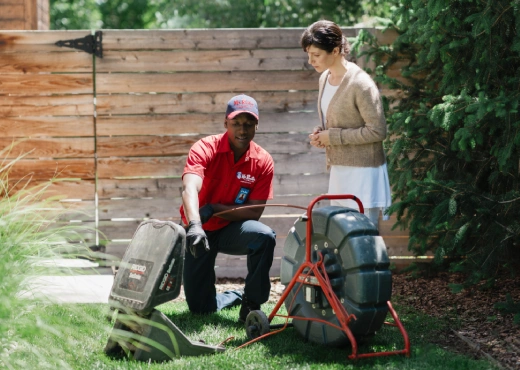
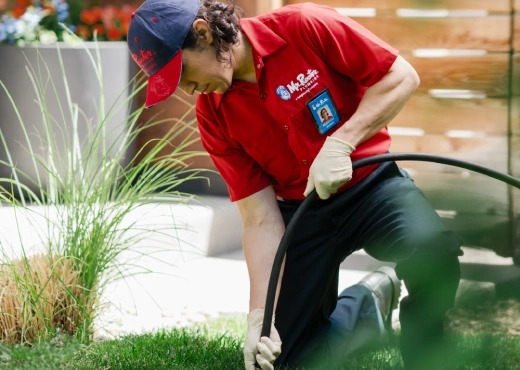
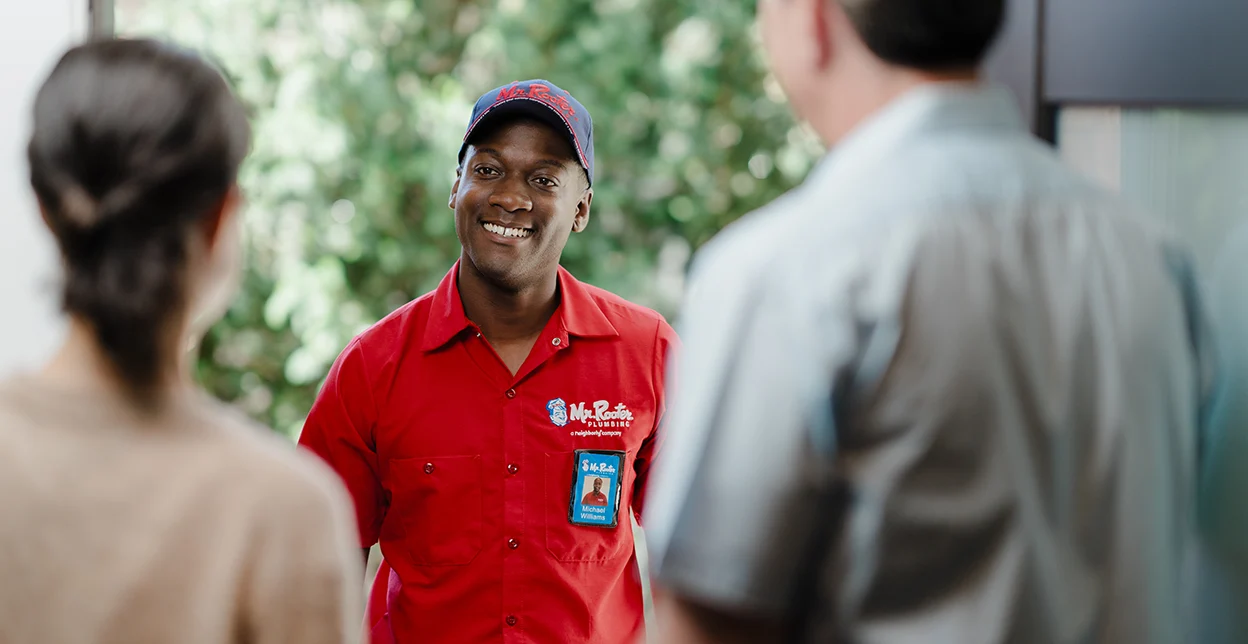
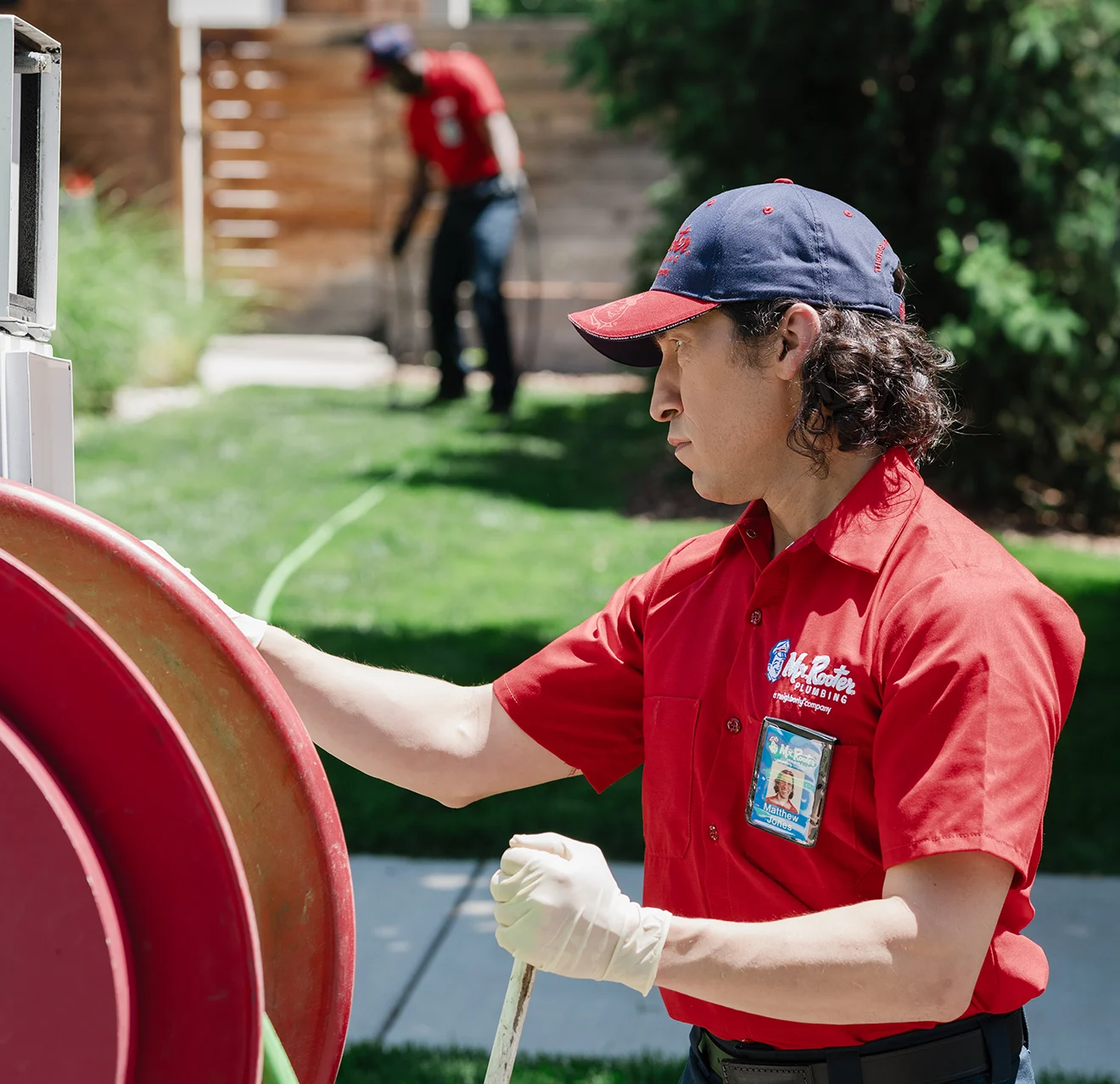
Mapping a line before jetting it works the same way outside the house. In the Woodland Acres area of Los Altos, a customer at a contemporary ranch-style home asked us to find the exit point of their storm drain. Adrian and Manuel, two of our plumbing service professionals, mapped the line first, so they knew its route and where it came out before any water went in. Then they used the hydro jet to clear it of debris and blockages ahead of the coming storm. It was a storm drain, not a sewer lateral, but the order of work doesn't change with the pipe: find out where a line goes and what's in it, and only then put pressure through it.
Sewer laterals in Mountain View face a different problem: the city's tree ordinance dates from 1961 and its heritage tree ordinance from 1975, so the mature trees over those laterals are staying, and so is the root pressure on the pipe. That argues for managing the line rather than fighting it. If what brought you here is one stubborn clogged drain rather than a pattern, that's a smaller job, and we'll say so.