Apr 29 2025
Who needs a sump pump? The answer to that question may surprise you because all homeowners should have a sump pump. You may believ
Learn more
Who needs a sump pump? The answer to that question may surprise you because all homeowners should have a sump pump. You may believ
Learn more
For many homeowners, heavy rain can be a huge nuisance. From pooling water in your yard to flooding in the basement, excess water
Learn more
The plumbing systems of any home encompass elements that do the important jobs of conducting household water and waste.
Learn more.webp)
For many families with young kids, a goldfish makes a great starter pet. Sadly, most are not long-lived, and there will come a tim
Learn moreDo you have old pipes in your basement? Many houses do, and while some appreciate the rustic look, most homeowners want to cover u
Learn morePlumbing problems plague mobile home residents just as much as they do site-built homeowners. However, because the systems are dif
Learn more
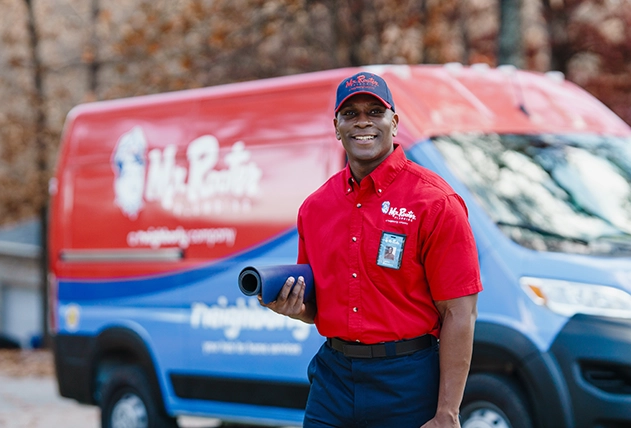
Since the original Mr. Rooter was founded in 1970, the company has remained committed to a set of core values that are rooted in performing quality work at honest prices. Nearly half a century later, the original Mr. Rooter business is still servicing homes and businesses in and around Oklahoma City. It’s still independently owned and operated with strong ties to the community that made it all possible.

The plumbing systems of any home encompass elements that do the important jobs of conducting household water and waste. Systems include nearly any appliance or utility that concerns water and in some cases, other liquids:
\n
We tend not to think often about the drainage systems of a house since their workings are mostly unseen, but they remain essential to the good functionality of nearly everything else inside and outside the house. Failing or ineffective drainage can cause everything from minor irritation and annoyance to major expense and repair.
\nResidential drainage systems often feature outdoor catch basins and/or dry wells, so a solid understanding of what they are and the jobs they do can be beneficial.
\nIt is not unreasonable to expect a mostly carefree drainage system, but it requires a commitment to and investment in proper installation, maintenance, and service. A thorough knowledge of the system in place, along with regularly scheduled checks and maintenance, will achieve a smooth-running system and prevent failure as well as the need for repair.
\n
While it is public systems that seem to be better understood, private water, waste, and drainage systems contribute to the overall water picture and should also be understood and attended to. Knowing the different uses for a catch basin vs. dry well serves as a benefit to nearly anyone since both utilities exist in a number of residential conditions and can provide solutions to a number of drainage issues.
\nThey exist in both rural and urban settings within environments that may be challenging due to steep, sloping or lowland terrain and soils that are rocky, dry, saturated or mineral-heavy.
\nThough they are different utilities, nearly all kinds of catch basins and dry wells have at least five major things in common:
\nDepending on people’s preferences or current situation, either kind of drainage aid can be used to catch and process water that runs off the roof, driveway, patio, porch, deck or lawn, as well as used water from the household such as from laundry, dishwashing, bathing and septic water from which solids have been filtered.
\nThe main difference between the two kinds of drainage utility is that by definition, a catch basin has a water-tight underground container while a dry well is normally a permeable hole in the ground. This article answers some commonly asked questions about catch basins and dry wells.
\n Generally, a catch basin is a drainage system designed to carry water away from your home and perhaps direct it across the property before it runs to a public storm-water system, dry well, local water body or into the ground. A catch basin can take many forms, but it’s common to see some kind of grate over an angled inlet, often with an in-ground concrete or plastic basin that catches the water. From there it may be pumped out and released elsewhere, routed via subsurface pipe to a release location or allowed to evaporate.
Some utilities called a catch basin may have an open design, but most are enclosed containers underground. A catch basin is usually situated at a low point of the property and will have some type of drainage pipe or other conduit attached that slopes away from the basin itself.
\nThe catch basin might do any combination of functions such as catch, hold and filter the runoff water from the lawn, around the house, off surfaces and out of the gutters. You can find catch basins in homes and businesses that use both public and private water conveyance systems.
\nIn a residential setting, the catch basin might be a 12-foot by 12-foot square box sold at home improvement stores for about $51, or like its public-sector counterparts, it can be a much bigger structure made of concrete or lined concrete blocks. The price of a bigger catch basin would of course be more than the small, premade type, but the cost would depend on the structure’s size and the going rate of materials. Catch basins might also be made of reinforced concrete or polypropylene that has perforated sides and bottoms.
\nThe size, structure type and other specifications for a catch basin depend largely on what kind of water it will receive and how much of it. For example, the catch basin for a big parking lot would likely be made of concrete with a large metal grate and be located directly underneath the surface that drains to it. There are also cases where a water pump helps to redistribute the water in a catch basin, depending on what kind of water it holds and where it can be routed to from the basin or well.
\n\n
Simply put, a dry well is used for the drainage of water from a property, but the water can be storm-water runoff from the roof and paved surfaces, septic-tank water from which the solids have been filtered or used water from the shower, laundry, dishwasher and sinks.
\nLike a catch basin, a dry well might also collect rainwater runoff from gutters and other impervious surfaces around homes and businesses such as the driveway, patio and walkways, and other areas. Dry wells take many forms and can serve a variety of purposes in household drainage, and it’s possible to see them used in conjunction with a catch basin or to see more than one used on a single piece of property.
\nDry wells, which may also be called seepage pits or leaching pits, are typically dug somewhere near the lowest point of the home site and reinforced with rocks, stones, gravel, brick or concrete. It is normally an underground hole with some type of grate or covering over the top. Runoff water flows to and into the well, and then the soil in and around the hole absorbs and somewhat filters it.
\nPeople sometimes mistakenly call a dry well that receives water from the septic system a cesspool, but a cesspool involves raw sewage whereas a dry well does not. You may hear this type of water referred to as the septic “effluent,” which may also include water from dishes, bathing and laundry.
\nThe water usually runs to the dry well through an underground pipe, but sometimes, it may flow over the grass to get to the well, which builds in another step of natural filtration. Once in the well, the water runs through the rocks, stones, gravel, brick or concrete, which provide filtration.
\nIf the system is not functioning properly and the water bypasses this natural filtration system, it will convey to nearby waterways unwanted particulate matter from the roof, driveway and other areas including water from the septic system. Wherever they are unintentionally or inadvertently deposited, those contaminants can then adversely affect plant and animal life, influence water-body temperatures and compromise soil health.
\nDry wells can be filled with gravel, concrete, rubble, stones, brick-and-mortar or another kind of rock that not only provides natural filtration but also reinforcement against collapse, and the hole is usually six to eight feet deep and four to ten feet square or round.  The depth and diameter of the dry well depend on how much and what kind of water you want to convey, how often it will come, the percolation rate of the soil around it, the slope and several other factors.
Still, many residents like the idea of having a dry well for certain parts of the plumbing system to augment an aging septic system or to alleviate flooding on the lawn or other outdoor areas. Some people don’t need much volume and want a simple, small pit filled with gravel or rock. Other homeowners want to be prepared for the worst and have a dry well that handles a large volume of water and can then slowly release it back to the earth and groundwater.
\nA catch basin and/or a dry well may be used in many kinds of residential as well as public-sector settings on large and small scales. They are utilities that seek to convey, hold and distribute water in the most desirable way rather than let it sit in or flow to places it should not be, where it usually causes some kind of damage or other unwanted issues.
\nHouses exist in all kinds of configurations and orientations that give their families challenging drainages, inc
\nYou may find a catch basin or dry well in place to help the septic system leach field from which water drains. As these waste-disposal systems age and environmental conditions around them may change, they can develop problems in parts of the leach field or may just be old enough that their ability to process the water has diminished over time.
\nIt’s usually a good idea to consider the replacement of a system that for whatever reason cannot properly process the liquids from the septic system that drains to the leach field, but in some cases, a dry well can help manage excess septic system water.
\n
Either utility can also provide a means to take the dirty water from a plumbing fixture such as a sink or washing machine that is far from the main septic system. In some remote cases, it makes more sense to construct a separate drainage system than to try and route an underground line to the existing septic pipes.
\nMany old and new-construction homes incorporate one or several dry wells or catch basins in order to encourage good drainage on the property. Both utilities can effectively address a range of different conditions, including a terrain that just doesn’t drain well and might have patchy turf, moss or saturated areas.
\nYou and any other homeowner or resident know their property better than anyone else, and there are some signs that may indicate you need supplemental or improved drainage:
\nThe presence of any of these conditions can be helped and often solved with a correctly sized catch basin and/or dry well. Any of the issues caused by poor drainage can be annoying, and many are even concerning since water can damage property.
\n
The most common problem with catch basins is that debris accumulates on or in them over time, which slows or stops drainage, produces bad smells, causes flooding and might incur costly repairs if the clog causes some kind of failure or backup.
\nOne way to prevent unwanted scenarios and catch-basin repairs is to clean the catch-basin grate regularly and to check it after heavy rains. Most people prefer to have this done for them, and professional, licensed plumbers like we have at Mr. Rooter of Greater Syracuse can help to locate and assess your catch basin, which then gives you the information you need to set a catch-basin maintenance schedule.
\nTo some extent, immediate environmental conditions affect the condition of a catch basin. For example, you should consider:
\nThese are all factors that matter as you make catch-basic maintenance decisions. It also helps to consult a professional to make sure the basin is properly sized and installed as well as functioning properly.
\nSome parts of a catch basin, mainly the underground pipes and water receptacle, are unseen but can be assessed for proper performance both by above-ground observation, evaluation of system performance, and by subsurface inspection using a tiny camera, the plumbing video camera. Cracks, leaks, clogs and crumbling concrete can send water to places you don’t want it and create problems in other areas, which makes regular maintenance and service not just a measure for peace of mind, but also for proactive problem prevention.
\nMany problems can occur with a dry well depending on the conditions, but some of the common ones that may cause dry-well repair are listed here:
\n Like in the catch basin, a buildup of leaves, sediment and other assorted materials inhibit or prevent the function of a dry well, and that is when the bigger headaches can come in the form of flooding, damage, standing water, foul smells and even dangerous bacteria.
There are a number of measures that will help keep your dry well or catch basin functioning properly:
Usually, an annual or semi-annual inspection and maintenance plan is sufficient for average situations.
\nMost people prefer to have a professional perform the cleaning task. Nobody enjoys pulling out the mystery wads of debris that are impeding drainage, and a licensed plumber has the expertise to make sure the dry well’s structure and parts are in good condition and the proper tools. Sometimes the walls of the well can get so gunky that thorough draining and cleaning is needed before correct drainage can resume.
\nA good, general maintenance practice that everyone can do themselves is to keep any visible parts of the system such as the trap and grate free of debris, especially leaves in the fall. Leaves can effectively cover the entire surface of the utility and cause the water to fully bypass the grate or cover and then flow to places it should not.
\nThe “fogs” come in the form of many things we don’t typically think of as direct forms of fat, oil or grease, such as butter, gravy, shortening, meat scraps in the disposal, salad dressing, pastry and fried foods. The city-states that just one teaspoon of fat kept out of one drain each day prevents a total of 12 pounds of fat, oil or grease per year from running to and through both public and private systems, where they cause clogs and do damage.
\nEven systems with good installation and function can be degraded over time with the fog, as well as soap scum, residuals from fabric softener and detergents, laundry lint and particles from the roof and patio. These materials are a little less obvious than leaves and vegetation, but they can be equally as harmful if allowed to accumulate. These facts support the logic of regular inspection and cleaning of dry wells, catch basins and septic systems.
\nGood maintenance will prevent you from having a costly repair bill that can potentially involve water pumps, excavation and new mortar or concrete. The cost of an annual or semi-annual professional inspection is small compared to what any one of the bigger projects or major services could cost, such as a catch-basin replacement.
\nIt’s pretty common for people to endeavor all kinds of do-it-yourself projects around their homes, sometimes to save money and sometimes because they just enjoy the improvement to their standard of living. However, the drainage around a house such as a catch basin or dry well is truly complex, and usually professional help is advised if not required to complete the tasks involved.
\n Dry-well replacement can cost in the range of $1,000 to $3,000. It is something to get right because even a slight imperfection in the slope of the pipe or an incorrect fitting can make the dry well lose effectiveness. An average homeowner might not know that a catch-basin outlet needs a minimum of a three-inch-diameter pipe as well as a down-facing elbow or T-joint to discourage clogging.
Not everyone will realize the well’s location relative to the water table will affect its performance and can mean the difference between it back up or not. The system should be correctly sized to handle large volumes of water, and the choices of piping material will usually be corrugated or smooth. While smooth usually costs a bit more, it reduces the chance corrugated that debris will stick, cause a blockage and prevent the water from flowing as it should.
\nProper installation can also be a matter of law as neighbors, municipalities, counties and states grow increasingly more focused on clean-water legislation under the federal Clean Water Act. It is common for cities, villages and towns to have laws or be considering laws that mandate inspections of catch basins, dry wells and other private utilities, which all contribute to the overall drainage in an area.
\nWhere the water comes out and what it contains is a matter of great importance, and people can be held responsible and penalized for a non-conformant system that negatively affects groundwater, water bodies, neighboring properties or public systems. Most good guidelines and now ordinances aim to ensure that the water of a dry well or catch basin is routed and released correctly and that the proper-sized pipe is used to connect a catch basin or dry well to the various things draining to it.
\nThe law often requires certain clearances, components, and specifications for various drainage systems, and the person installing should be aware of the soil absorption rates, the strength of various materials used, and how much capacity is needed to accommodate the characteristics of a property.
\n Depending on what goes wrong with a catch basin or the conditions under which one is installed, installation or rebuilding costs might range from $2,500 to $5,000. Catch basins suffer from many of the same problems as dry wells do, including incorrect installation and generally being undersized for the job. The constant nature of the freeze-thaw process can also cause damage to the concrete parts of your catch-basin system and then allow water to percolate, flow and otherwise escape.
Once the concrete or asphalt materials sustain some kind of damage, they must be repaired or removed and replaced in order for the basin to function correctly. The extent of repairs depends entirely on each individual situation, but they normally require professional expertise for a number of tasks:
\nInstalling or repairing a catch basin also requires many of the same trench-digging and pipe-attachment tasks as a dry well, which involve knowledge of the slope, soil, system capacity and water characteristics, at a minimum.
\n
As you seek to install, repair, service or maintain the drainage utilities around your home, you may encounter the term French drain used either correctly or incorrectly. While some people refer to it as the basement dewatering system or interior foundation-drainage system, a French drain is the outdoor, buried drain line that carries water away from the home. It often runs to a dry well or seepage pit located about 15 feet or more from the building.
\nDry wells and catch basins alike can be a help to the surrounding environment if they’re installed correctly and work right but can be a detriment if they clog or malfunction. It seems so natural to let water flow to where it will, but the various utilities are there to aid nature in filtering out some of the harmful elements that flow in and to water, including:
\nThe laws and other regulations in place to mandate clean water not only aim to protect water but also to spread awareness about how clean water and responsible drainage practices are up to each individual who owns some kind of property. The onus is on the landowner to correctly install and then maintain drainage systems including catch basins, dry wells and septic systems. Different government entities regularly test all forms of water including coastal areas, lakes, rivers, groundwater and water tables and aquifers.
\nWhen one of them shows distress such as pollution, increased temperature or dead fish, it usually launches an investigation to find the source of the problem, and anyone contributing to it can be subject to fines, penalties and repair or restoration measures. From big chunks of debris to small, unseen chemicals, the concern for clean water comes through local agencies directly from the Environmental Protection Agency.
\n One of the EPA’s charges is to study and research how best to distribute the water society uses, ultimately without any harm to the supply or environment. The agency lists ways to prevent debris and the garbage that blows around from entering storm and sewer drains. Among these tips is using catch basins with accessories such as hoods, screens and fabric inserts.
A curb hood can prevent excess debris from entering the storm drain. A screen installed inside the catch basin can also prevent trash from entering and accumulating in the system, including outlet pipes or other features. Those with a mesh size of at least 5 millimeters are considered by EPA to be “full-capture devices.”
\nThe EPA also lists catch-basin inserts as a best-practice way to manage stormwater and capture trash. It can be a fairly easy and inexpensive way to augment an older system or set up a new one since it is usually placed where the basin discharges and features a steel-frame insert with durable fabric-filter material that can handle high flows and debris load.
\nAs the analysis of water bodies and supply continues, many are found to have concerns for one or several reasons, and that ratchets up the need for individual conscientiousness about water, drainage and waste. The EPA’s sections on trash and floatables state, \"Over 200 individual water-body reaches...have been listed for trash, debris or floatables since 1996.\" Those water-body reaches include Alaska, California, Connecticut, the District of Columbia, Hawaii, Maryland and New York, and the “listed” status indicates that they are compromised in some way.
\nWhen a water body or supply is found to be compromised, the responsible agencies will take action to correct the problems, which often includes legislation, public-awareness campaigns and further water analysis. One measure seen more in urban areas is where neighborhoods adopt a section of storm sewers, catch basins or retention ponds in order to better maintain them.
\nMr. Rooter of Greater Syracuse provides the full range of expertise and skills needed to assess, install, repair and maintain any kind of dry well or catch-basin system. Our specialists are licensed plumbers certified by Onondaga County for plumbing leak detection or any plumbing-related project in a residential or commercial setting, and we are familiar with the applicable regulations in the Syracuse-Oneida local area as well as state and other rules.
\nWhether you suspect a problem, already have an issue or want to know how you can better maintain any part of your water usage or drainage system around the house, call Mr. Rooter to have a professional visit your home and perform a plumbing check-up at no charge. Ultimately, better maintenance and upkeep saves you money over time since it prolongs the life of your system and helps prevent breakdown.
\nThis general check of the system provides you with an assessment of its performance and will help discover any issues or problems. Almost always, it’s best to find and fix problems sooner rather than later, since they can worsen over time and incur even costlier repairs. Even if you have no concerns about your dry well or catch basin, an initial inspection of it provides a performance baseline you can use to assess its future performance.
\n
For many families with young kids, a goldfish makes a great starter pet. Sadly, most are not long-lived, and there will come a time when you and your children have to bid a final goodbye to your little, watery friend. Because of their size, the age-old disposal method is a gentle flush down the toilet. As it turns out, though, flushing your pet is not a good idea.
\nAlive or dead, you should never flush a fish. Here are a few reasons why.
\nIt may be carrying disease or parasites that caused it to die in the first place. Unless you deep clean every inch of your bathroom, there could be traces of these germs and bacteria where its remains have touched that could lead to future issues.
\nWhile your septic system and plumbing are designed for disposing of undesirable materials, dead fish are not on the list of flushable items. Septic systems are only meant to handle human waste, water and toilet paper. Plus, if it gets stuck in the pipes, a blockage or infestation could occur.
\nIf your water or sewage companies find out that you are responsible for damage due to flushing a dead fish, you could be held solely responsible. It is also unlikely that your insurance would help cover the costs.
\nEven if your fish looks dead, it may actually be alive. What happens if you flush a live goldfish? It is likely to suffer due to all the noxious wastes it encounters.
\nWhether dead or alive, diseases or parasites could be transmitted to local fish species. There is also a possibility that those diseases can be carried in the water to the local environment and wildlife.
\nFish that survive flushing can make their way to waterways and wreak havoc on the local habitat. They may compete with native species for food and resources, kill local fish and wildlife and destroy vegetation.
\nIf you have a blocked drain or a different plumbing issue, Mr. Rooter Plumbing of Greater Syracuse is here for you. We can handle any pipe or septic system problem, no matter the cause. Contact us today to learn more.
\r\n"}, { "custom_dt_modified":"2025-04-29T09:09:16Z", "custom_s_local_url":"/greater-syracuse/about-us/blog/10-basement-ceiling-ideas-for-old-home-pipes/", "custom_s_opus_version":"2", "custom_s_heading":"10 Basement Ceiling Ideas for Old Home Pipes", "custom_s_local_dba":"greater-syracuse", "custom_dt_created":"2022-05-25T00:00:00Z", "custom_s_category":"none", "custom_ss_category":["none"], "custom_s_article_summary_Image_url":"", "custom_t_content_summary_Desc":"Do you have old pipes in your basement? Many houses do, and while some appreciate the rustic look, most homeowners want to cover u", "custom_t_content_summary_Image_url_alt":"", "custom_t_heading":"10 Basement Ceiling Ideas for Old Home Pipes", "custom_t_content":"Do you have old pipes in your basement? Many houses do, and while some appreciate the rustic look, most homeowners want to cover up those eyesores. Learn how to hide old pipes in your basement with these ideas.
\nWith a little creativity, you can make your basement look modern and beautiful with these ideas.
\nPainting the pipes black will make them blend in with the background better, and you'll get a sleek, modern look for your home.
\nWood planks look great on floors, so why not use them on the ceiling? You can cover up the pipes and add a fresh dimension to your basement.
\nTin can provide a new level of sophistication, with fun patterns and a quiet charm that makes your basement feel more unique.
\nIf you have a low ceiling in your basement, try corrugated metal, which will give the illusion of greater space.
\nDecorative tiles give you a pretty coverup. If you match the tiles to what you have upstairs, you'll get uniformity throughout your home.
\nWooden beams look terrific in any room, and they're especially helpful when you try to cover up your ceiling. Pick beams that contrast with the backdrop color for an extra pop.
\nShiplap isn't just for walls! You can line your ceiling with these attractive planks and cover up the pipes beneath, giving you a brighter, merrier space.
\nYou can paint your ceiling's trim to highlight its detail and draw people's eyes away from your pipes.
\nIf you've got an artistic inclination, no one will notice your piping if you paint a summer sky on your ceiling or put an approximation of constellation locations up there!
\nDrop ceilings have a geometric pattern that attracts attention and will help pull eyes away from where the piping leads.
\nWhether you have a pipe burst or another problem that requires attention, get in touch with Mr. Rooter Plumbing of Greater Syracuse. Our friendly service professionals can assist you with anything. Contact us today to get started!
\r\n"}, { "custom_dt_modified":"2025-04-29T08:26:19Z", "custom_s_local_url":"/greater-syracuse/about-us/blog/mobile-home-plumbing-problems/", "custom_s_opus_version":"2", "custom_s_heading":"Mobile Home Plumbing Problems", "custom_s_local_dba":"greater-syracuse", "custom_dt_created":"2019-04-08T00:00:00Z", "custom_s_category":"plumbing", "custom_ss_category":["plumbing"], "custom_s_article_summary_Image_url":"/us/en-us/mr-rooter/_assets/images/mrr-blog-us-greater-syracuse-mobile-home-plumbing-problems.webp", "custom_t_content_summary_Desc":"Plumbing problems plague mobile home residents just as much as they do site-built homeowners. However, because the systems are dif", "custom_t_content_summary_Image_url_alt":"mobile home plumbing", "custom_t_heading":"Mobile Home Plumbing Problems", "custom_t_content":"
Plumbing problems plague mobile home residents just as much as they do site-built homeowners. However, because the systems are different in so many ways, you will need special knowledge and skills to understand and work with your manufactured home's plumbing.
\nMobile homes do not always encounter the same plumbing issues as site-built homes. If something goes wrong, you need to know the necessary information such as where to turn off the water to mitigate damage until a plumber can arrive. Understanding the basics could save your home and possessions from water damage.
\nYou can do some minor plumbing repairs yourself, such as preparing your plumbing for winter or using a plunger. Knowledge of how your home's plumbing works will make it easier for you to determine when to do minor chores yourself and when to call a professional. If you feel concerned about a plumbing problem, always consult a Mr. Rooter expert for service.
\n
Plumbing systems consist of fixtures and incoming or outgoing pipelines. There are numerous piping materials available. Old homes once used iron for piping. Today, due to the risks of wear and rusting, this material has fallen out of favor for cheaper, safer materials like copper, CPVC — chlorinated polyvinyl chloride — and PEX — cross-linked polyethylene.
\nFixtures are another essential element of your plumbing system. These are the parts you interact with daily. Faucets, toilets, showers, and washing machines are all plumbing components. Problems may occur with the fixtures or with the lines. Understanding both will help you identify the source of the problem when something goes wrong.
\nThe plumbing system in every home or business starts with fresh water lines to bring in clean water. Some of this water goes to the water heater for warming. The hot water travels through its lines to come out of the hot water faucets on your sinks and appliances. Cold water continues through the supply pipes to service your washer, toilet, bathtub, shower, and taps.
\nAfter you use the water from any fixture, the rest goes down the drain. All the drain lines connect to the major waste line that leaves your home. A blockage in the home's waste line could cause a backup of wastewater into the house. This job requires expert repairs to clear the clog safely. Due to the design of a mobile home's plumbing system, removing a clog could be more difficult if it is in the main exit line from the home. A professional plumber will know how to deal with the situation.
\nTo ensure drain lines work correctly, they must have ventilation. Think about trying to pour water out of a container with only one opening. It does not flow as quickly because as water leaves, air must come into the container to take its place. The same principle holds with your drain lines. Air needs to enter the system to help wastewater move out of your home as fast and smoothly as possible. The location of the ventilation for site-built and mobile homes is one of the significant differences in the plumbing systems for these constructions. Knowing the site of the ventilation spots can help you see if a blockage is restricting drain flow.
\nThe incoming and outgoing water lines, vents, and fixtures in your home create the entire plumbing system. However, the specific design is not the same in a mobile home compared to a site-built home. Discover the differences to know how your mobile home has a unique plumbing system.
\n
If you live in a manufactured home, you may not initially be aware of the plumbing differences from a site-built home. Because mobile homes are not permanent structures, the plumbing entering and leaving the house has a distinctive design. Everything from the materials to the location of the pipes and drain venting has different orientations compared to site-built homes.
\n
The materials in manufactured homes often are innovative in the plumbing world. Homebuilders like to use new plumbing in mobile homes to see how they function. For example, builders first used PEX piping in manufactured homes before it became common in site-built home designs. Today, this pipe material is a standard in the industry.
\nSite-built homes typically use copper for incoming water, but in manufactured homes, this is not the standard. CPVC and PEX are more common in mobile home supply lines. Both work for hot and cold water lines. These materials may last as long as the incoming copper lines used for site-built homes. The plastic pipes are cheaper and easier to install. PVC — polyvinyl chloride — pipe may be used for drain lines and some supply lines.
\nSome manufactured homes built between the 1970s and 1990s had polybutylene pipe installed. The bleach used to sanitize the water supply would cause the material to wear out and leak. This type of pipe is no longer available. If you have it in your mobile home, consider repiping to replace it. During negotiations, request the owner to repipe the house at their expense before you move in.
\nDrain pipes carry waste water out of your home. Materials typically used for waste lines include PVC, chromed brass or cast iron. PVC is likely to be the chosen material because experts who know how to plumb a mobile home find it easier to install. It also costs less than metal pipes. These materials are not very different from those used in site-built homes, though, making drain pipes a common factor between the two.
\nPiping locations differ between mobile and site-built homes. Site-built homes have supply lines that run through the walls. In mobile homes, though, the incoming water lines run under your house. This pipe orientation can pose a problem in the winter from freezing pipes. Depending on the layout of your home, the pipes may run next to your subfloor heating ducts or along the edge of the floor. Your water heater's location will also determine how the pipes come into your home.
\nVents for the drain lines also differ between site-built and mobile homes. While vent stacks to admit air into the system are required by law, cleanouts are not. A mobile home drain system diagram may have vents visible on the roof. More often, though, mobile homes have vents at each fixture. For instance, a sink may have a vent under the counter.
\nOverflows and cleanouts are not included on the fixtures or outside the home of manufactured homes. Because these openings are not features of mobile homes, clearing out blocked drains becomes slightly more difficult. The difficulty adds to the reasons to consult with a professional if you have plumbing problems in your manufactured home.
\nSince the plumbing materials in manufactured homes differ from those in site-built homes, you may not be able to use the same resources for DIY solutions. Plumbing materials for manufactured homes tend to cost less and be easier to work with. Those attributes do not give you a pass to attempt every plumbing repair yourself. Educating yourself on the materials can help you know what problems your home is likely to face based on the materials in the supply and drain lines.
\nPolyvinyl chloride, better known as PVC, is a traditional piping material that still may be part of your vents and drain lines. In repaired lines, you may see patches of PVC replacing worn sections of drain lines. PVC plastic is easy to cut and find fittings for. It also is lightweight, which makes working with it more manageable. It replaces an older, black plastic known as ABS — acrylonitrile butadiene styrene — which may still be part of older constructions. ABS fell out of use when builders discovered it broke down in sunlight.
\nDo not confuse standard PVC with chlorinated polyvinyl chloride, or CPVC. You cannot interchange the two types. CPVC has been specially treated for use with both hot and cold supply lines. Today, CPVC is a favorite cold and hot water line piping. Plumbers installing these pipes usually glue the parts together for a permanent fit. Occasionally, they may use grip fittings for future changes. Another reason builders use CPVC is its low price to purchase and install. The low cost makes CPVC ideal piping for supply lines in manufactured homes where the value of all components becomes a prime deciding factor.
\nPEX, or cross-linked polyethylene, consists of colored tubing that bends easily. This durable, long-lasting material was tested in mobile homes and is not in all types of buildings. PEX also has the unique ability to bend to 90-degree turns, which rigid pipes cannot do. Thanks to its flexible design, this material requires fewer connections, which creates fewer potential leak sites. Though the material is flexible, PEX is resistant to temperatures ranging from 32 degrees Fahrenheit to 200 degrees Fahrenheit. With blue, red, and white colors, use blue for cold water and red for hot to make identifying plumbing lines faster.
\nPEX is still a relatively new plumbing option, but it costs less than many other supply line materials. Compared to the cost of copper pipes, which are not common in mobile homes, PEX costs one-third less. Because plumbers can install PEX quickly and with fewer connections than CPVC, this material has become a favorite of both homeowners and plumbing professionals.
\n

Your water lines are not immune to damage. Problems range from frozen to leaking pipes or dripping faucets. Depending on the type of issue, you may be able to wait until the next business day to call a plumber, or you might need emergency service. Burst pipes or water flowing into your home constitute emergencies for which you require a plumber to repair. Knowing what is wrong with your plumbing will make deciding when to call for help more straightforward.
\nA common problem with mobile homes that many site-built dwellings do not have is frozen pipes. Because manufactured homes have pipes that run under the house, cold air can more easily freeze the water inside. An ice block inside one of your pipes builds pressure in the system until another portion of the supply line bursts. A burst pipe will quickly pour water into your home, causing damage to the structural components and your possessions. Shut off the water to your house before calling a plumber to fix the pipe.
\nTo keep your pipes from freezing, protect them from sub-freezing temperatures. Use heat tape to warm the pipes under your home during unusually cold winters. A thermostat on the tape will allow it to maintain a temperature warm enough to keep the water flowing without overheating. This tape lasts only three to five years, but you must keep it plugged in the entire time you use it. When selecting heat tape for your home, always choose a variety designed for the material your supply lines are made from.
\nLeaking pipes can be visible or hidden. Water damage or mold may arise from an unseen leak in a mobile home sewer pipe. Because leaks can cause damage to other parts of your home than the plumbing, you need to fix the issue soon.
\nThe best part about mobile home plumbing is the layout of the pipes. Hidden leaking pipes tend to be those that run under the home. This location keeps water damage restricted to the floor around the pipe leak. In a site-built home with pipes in the walls, the water leak may cause damage to the immediate area and anywhere the water drips down.
\nMobile homes could develop leaks in pipe joints, which are more common in pipes with more joints. A cause of leaks in mobile home plumbing systems comes after the home reaches its final destination. Moving the house and the settling that occurs after an stress rigid pipes, resulting in leaks. Freezing can also cause holes in the supply lines.
\nIf you notice low pressure that you cannot immediately fix or see higher water bills than usual, suspect a leak in your system. A leak in your plumbing, whether hidden or not, needs expert repairs. Call a plumber to help you find and fix leaks in your pipes.
\nDrain clogs often happen from pouring inappropriate substances down the drain. For instance, you should never put grease down the kitchen sink because further down the line, it can cool and congeal to create a blockage. Hair in tub drains can do the same thing. Do not use chemical drain cleaners if you have a clogged drain. These chemicals can injure a plumber if you must call in a professional to repair the problem. If high-pressure water or plunging will not move the clog, call a plumber.
\nLow water pressure could originate outside your home or at an individual fixture. For house-wide pressure problems, consult your neighbors to see if there is a local water issue. If the rest of your neighbors have adequate pressure and you don't, it is time to consult a plumber.
\nFor individual fixture problems, you may have a simple-to-fix issue with the aerator. Recheck the pressure after cleaning off the aerator. You may still need to call a plumber if your aerator became clogged from sediment in the lines. Deposits could indicate a bigger problem with your plumbing system a professional may need to address.
\nDripping faucets are one of the most annoying problems you can have in your home. Nothing will keep you up at night quite like a dripping faucet into a metal sink. You might need to replace a washer in your faucet to stop the drip. However, if your repair does not work, you could have a more significant issue and need an expert eye to identify and solve the problem.
\n
While you should never attempt significant repairs of your home's plumbing, there are some chores most residents can easily do in a few minutes. These tasks are skills you should have regardless of where you live. If you cannot solve your plumbing problems with these minor fixes, you need to contact a plumber who will have the tools and knowledge to help you.
\n
Whether you need to make a repair or have an emergency, you must know how to shut off your home's water supply. Look around your house for the water hose faucet. The larger valve next to the hose tap will control the water coming into your home. Turn it all the way to the right until you cannot twist it anymore. Check the water at a faucet inside your house to verify that you have successfully shut off the water. If you need to work on a single fixture, also turn the water control valve at the fixture into the horizontal position. Doing both prevents excessive pressure from the home's water from building at the closed source valve and leaking.
\n
For toilet and drain clogs, use a plunger to safely dislodge the blockage. Knowing how to use a plunger can save you money because 90 percent of the time you have a toilet clog, a plunger will clear it. Remember to never use a plunger after you have used a chemical drain cleaner. You could cause severe burns on your skin if the drain cleaner comes back up while you are plunging the drain.
\nUse a flange plunger for toilets and a cup plunger for tubs and sinks. The type of plunger does make a difference. Have both types on hand for all kinds of emergencies. Keep the plunger underwater and completely seal the drain with the base of the plunger. Do not flush the toilet or run water into the sink while plunging. With the plunger sealing the opening, push and pull the handle without breaking the seal for 20 seconds. Finally, pull out the plunger, and the drain should clear. If not, call a plumber.
\n
Keep the pipes under your home warm during the winter with pipe heating tape. Read the directions on the tape for how to install it. Never put insulation around the taped pipes, because the tape could overheat and cause damage to the pipes. Also, remember to keep the pipe tape plugged in throughout the winter to keep it working. Your pipes will not get any benefits from pipes that have heater tape and are not getting power.
\nIf your home loses power during the winter, know how to put pipe insulation around the pipes. Unplug the heater tape so it will not come on under the insulation when power gets restored. Choose pipe insulation to wrap around the lines under your home, which are more susceptible to the cold. You can always have a plumber help you with this chore if necessary. Do not forget to remove the insulation when you have power restored and can plug in the pipe heater tape.
\n
Do not let small trailer plumbing problems in your mobile home turn into a major headache. Plumbing issues will not correct themselves over time — they will only get worse. That is why you need to know whom to call if your plumbing has a problem.
\nOur professional, licensed plumbers at Mr. Rooter of Greater Syracuse are here to help with whatever problems or concerns you have. We offer standard installations, repairs, and emergency services for all types of homes in the area. If you have an emergency in the middle of the night, such as a burst pipe or overflowing toilet, you do not have to wait to call us. We have 24/7 emergency plumbers available for your convenience.
\nWe also offer checkups at no charge. If you think you have a plumbing problem in your mobile home, call us at Mr. Rooter of Greater Syracuse to have a service professional come out to look at your system. If you need repairs, our licensed plumber who is certified by Onondaga County for plumbing, leak detection, or any plumbing-related project can come out to resolve the issue.
\nMr. Rooter of Greater Syracuse has a code of respect, integrity, and customer focus. We strive to apply these values to every job we do. Let us help you with your mobile home plumbing, whether you need us now or in the future.
\r\n"}] }}